
The Menopause Nutrition Toolbox

Why is everyone talking about gut health?

If you’ve spent any time looking for advice about managing menopausal symptoms, you’ll probably have noticed that gut health is suddenly everywhere.

Probiotics. Prebiotics. Fermented foods.  Fibre.  Soy.  Phytoestrogens.  Supplements.

And for every article telling you that one particular food is the answer, there seems to be another telling you to avoid it.

It can be exhausting.

Especially when you’re already trying to navigate a body that feels different from the one you knew a few years ago.  Perhaps you’re not sleeping as well, feeling more tired, noticing changes in your weight or digestion, or simply wondering why things that once felt straightforward suddenly seem rather more complicated.

And then someone tells you that you need to “fix your gut”.

Where on earth do you start?

The good news is that you probably don’t need another complicated diet, an expensive collection of supplements or a complete overhaul of the way you eat.

What you might benefit from is understanding a little more about what’s happening inside your body—and how some simple nutritional choices may help support it.

Because your gut is doing much more than digesting your food.  And during and after menopause, it may be part of a particularly interesting conversation.

So, what does this mean for you?

Nutrition can be an emotional subject. Food is personal.  It’s part of our routines, our families, our cultures and our pleasures.  Many of us have also spent years being told what we should and shouldn’t eat.

So this isn’t going to be another list of rules.  My aim is to help you understand what the emerging science is telling us about the relationship between the gut, oestrogen and nutrition, and then turn that information into a few simple things you might choose to add to the way you already eat.

You don’t need to do everything.  You don’t need to do it perfectly.

Understanding gives you choices. And choices give you the opportunity to find what works for you.

What does my gut have to do with menopause?

If you’re wondering what your gut could possibly have to do with menopause, you’re certainly not alone.

At first glance, the two don’t seem to have much in common.  One is the place where your food is digested; the other is a stage of life associated with changing hormones.

But your gut is much more than a digestive system.

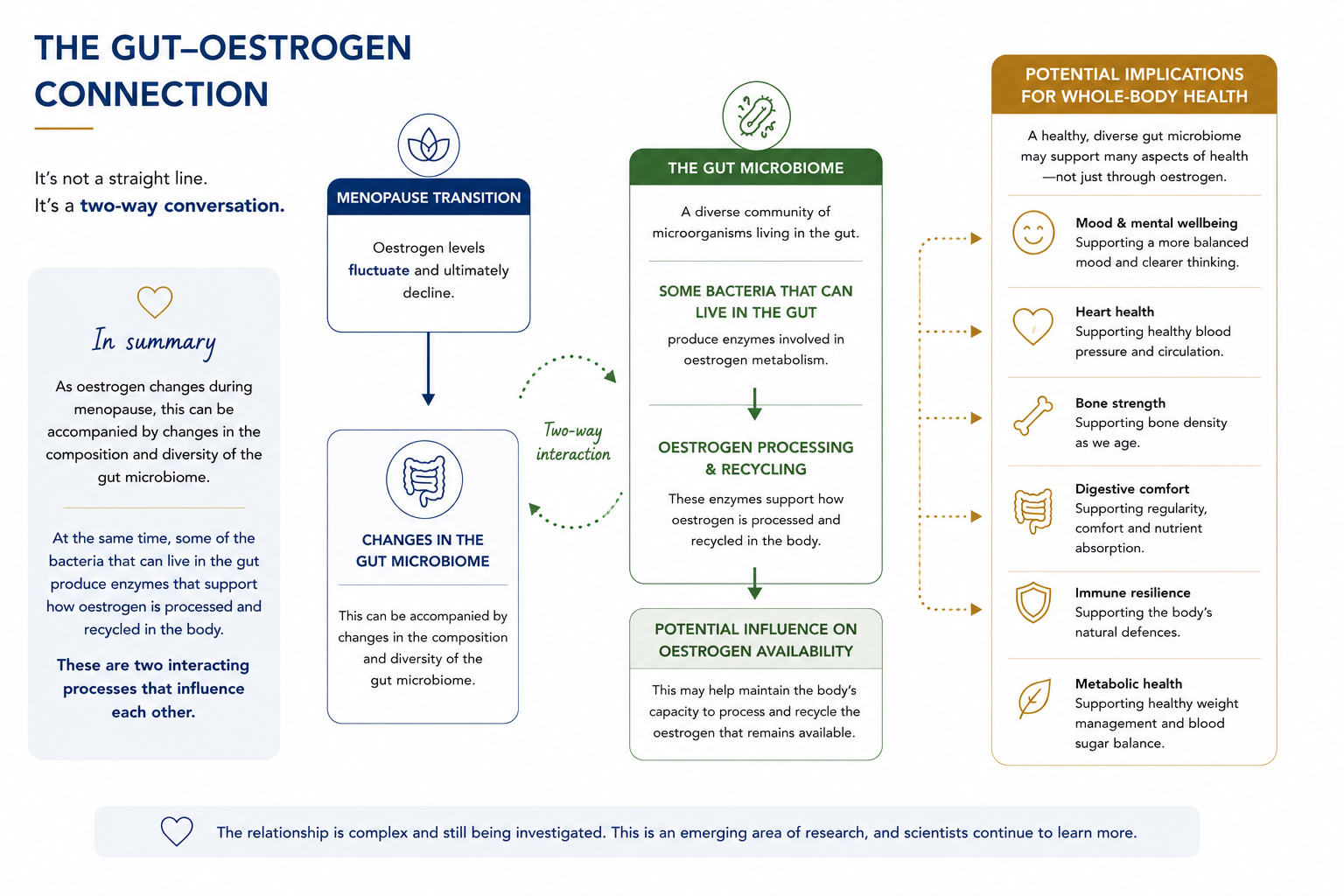
Inside it lives a vast community of microorganisms—the gut microbiome—that interacts with many aspects of our health.  And one of the relationships researchers are increasingly interested in is the two-way communication between the gut microbiome and oestrogen.

As oestrogen levels fluctuate and ultimately decline during the menopause transition, this can be accompanied by changes in the composition and diversity of the gut microbiome.  The relationship also works in the other direction: some of the bacteria that can live in the gut produce enzymes involved in the processing and recycling of oestrogen in the body.  This is a relationship that exists throughout life, but may become particularly relevant during and after menopause, when supporting the gut microbiome may help maintain the body’s capacity to process and recycle the oestrogen that remains available.

In other words, it’s a conversation.  Oestrogen can influence the gut microbiome.  The gut microbiome can influence how oestrogen is metabolised.

This is sometimes described as the gut–oestrogen axis.  And within the gut microbiome is a group of bacterial genes collectively known as the estrobolome, which can influence the metabolism of oestrogens and their circulation in the body.

Remembering the word estrobolome isn’t important.  What matters is the bigger idea; that your gut and your hormones don’t operate independently, they’re part of a much bigger, interconnected system.
So, does this mean that changing your gut microbiome will “balance your hormones”?

Not quite.

This is where it’s worth being careful with some of the claims you may come across online.  We know that the gut microbiome and oestrogen interact, and researchers are exploring what this might mean for women’s health during and after menopause.  But we don’t yet have a simple formula that says:

change your gut bacteria → increase your oestrogen → resolve your symptoms.

The science is more interesting—and more nuanced—than that.

Can the food we eat really have an influence?

It’s a fair question, and it’s one we need to answer honestly.

The short answer is: potentially, yes.

The foods we eat feed the bacteria in our gut, and this can influence the composition and diversity of our microbiome.  Some foods also contain plant compounds that can interact with oestrogen receptors in the body.

Research suggests these nutritional factors may help create a gut environment that supports the processing and recycling of oestrogen.  However, it’s important to keep things in perspective.

This isn’t about a quick fix or a magic food.  And we don’t yet have strong enough evidence to say that any one food or supplement will increase oestrogen levels or resolve menopausal symptoms.

What we do know is this.  The foods we choose can influence the environment in which our gut bacteria live.  And a healthier, more diverse gut microbiome may support overall health in many ways.

And that’s where our nutrition toolbox comes in.

The Nutrition Toolbox

There are three nutritional tools that are particularly interesting when we think about the relationship between food, the gut microbiome and oestrogen: prebiotics, probiotics and phytoestrogens.

They work in different ways, but they share something important: they can be incorporated into an ordinary, varied diet without requiring you to follow a special “menopause diet”.

🌱Prebiotics: feeding your gut

Prebiotics are types of dietary fibre and other compounds that aren’t fully digested by us but can be used as food by beneficial bacteria in the gut.

In simple terms, prebiotics help feed the community of microorganisms already living in your gut.

You can find prebiotic fibres in many everyday plant foods including onions, garlic, leeks, asparagus, bananas, legumes, whole grains and some nuts and seeds.

And this is one reason that plant variety matters.  Different types of plant foods provide different types of fibre and other compounds for our gut microbes to use.  Rather than looking for one “superfood”, eating a wide variety of plant foods may help support a more diverse gut microbiome.

A simple way to think about it: the more variety you give your gut microbes, the more variety they have to work with.

And you don’t need to transform your diet overnight.  Adding another vegetable, choosing whole grains more often, or including beans or lentils in a meal are all steps in the right direction.

🥣Probiotics: adding beneficial microorganisms

Probiotics are live microorganisms that, when consumed in adequate amounts, can provide a health benefit.

Some fermented foods contain live microorganisms, including yoghurt, kefir, kimchi, sauerkraut and certain fermented soy foods.  But there’s an important distinction here.  Not every fermented food is necessarily a probiotic food, and not every probiotic product has the same effect.

The evidence around probiotics and menopause is still developing.  Some studies suggest potential benefits for metabolic and bone health, but findings are not yet consistent enough to recommend a particular probiotic supplement for every woman.

So rather than taking a probiotic supplement, it may be more useful to think about making the fermented foods you enjoy something you eat regularly.

🌿Phytoestrogens: plant compounds with an interesting relationship with oestrogen

Phytoestrogens are naturally occurring plant compounds that have a chemical structure that allows them to interact with oestrogen receptors in the body.

This doesn’t mean that they simply “replace” oestrogen.  Their effects are considerably more nuanced.  Some phytoestrogens can bind to oestrogen receptors and, depending on the tissue and the circumstances, may have weak oestrogen-like or anti-oestrogen effects.

One group of phytonutrients that has attracted interest in relation to menopausal health is isoflavones, found especially in soy foods such as tofu, tempeh, edamame and soy milk.  Flaxseed is another food rich in phytoestrogenic compounds called lignans.

There is some evidence suggesting that regular consumption of whole soy foods may modestly reduce vasomotor symptoms such as hot flushes, while also potentially contributing to cardiovascular and bone health.

A toolbox, not a checklist

We’re not looking for a magic food.  We’re looking at what happens when these foods become part of an overall dietary pattern.

Think of these three tools as different ways you can support your gut health.  You can choose one, combine a couple, or use all three — whatever works for you.

The individual foods matter, but the pattern matters more.

So where do I start?

There is no single “best” way to support your gut microbiome.  Instead, think of the suggestions below as options to explore.  You might already be doing some of them.  You might find that one or two feel particularly easy to introduce.

The aim isn’t perfection.  It’s consistency.

1. Add more variety to your plate

Your gut microbes thrive on the different fibres and plant compounds found in a wide range of plant foods.  So rather than focusing on one particular “superfood”, try increasing the variety of plants you eat across the week.

Vegetables, fruit, whole grains, beans, lentils, nuts and seeds all count.

It could be as simple as putting one more vegetable on the menu for dinner, making oats part of your breakfast, or snacking on roasted chickpeas.

2. Give your gut something to feed on

Prebiotic fibres provide food for beneficial gut bacteria.  You don’t need to seek out specialist ingredients: many of the foods you may already have in your kitchen are good sources, including onions, garlic, leeks, asparagus, oats, bananas and legumes.

Add some beans to a soup.  Stir lentils into a curry.  Add flaxseeds or chia seeds to your smoothie or sprinkle them on your oats.  Roast onion and garlic with your favourite veggies.  Small additions can be surprisingly easy.

3. Include fermented foods you enjoy

Fermented foods can introduce live microorganisms into your diet.  Options include live yoghurt, kefir, kimchi, sauerkraut and miso.

You don’t need to eat fermented foods at every meal—or even every day.  Perhaps yoghurt becomes part of breakfast.  Maybe kefir is the base for a creamy salad dressing.  Or you add a little sauerkraut or kimchi alongside an existing meal.

And remember: fermented doesn’t automatically mean probiotic.  The two terms describe different things.  Some fermented foods contain live microorganisms, but they don’t necessarily meet the scientific definition of a probiotic.  Fermentation itself can also change the food, influencing its taste, digestibility and nutritional properties.

So you don’t need to choose between “fermented” and “probiotic”.  Consuming fermented foods can be one way of adding variety to your diet, while probiotic supplements are a separate option with more specific, strain-dependent evidence behind them.

For most of us, this is another reason to start with food rather than feeling that we need to buy a cupboard full of supplements.

4. Explore phytoestrogen-rich foods

Phytoestrogens occur naturally in a number of plant foods.  Soy foods such as tofu, tempeh and edamame, together with foods such as flaxseed and sesame seeds, can be easy additions to everyday meals.

If soy isn’t something you currently eat, you don’t need to make a dramatic change.  Try edamame in a salad, tofu in a stir-fry or a soy-based yoghurt or milk.

Find what works for you

You don’t need to introduce four new habits this week – choose one.

If it works for you, keep doing it.  Then, when it feels like part of your normal routine, add another tool to your box.

The best nutritional strategy is one that can become part of your life — one that fits your routines, your preferences, your budget and the way you already eat.

The potential value of these foods doesn’t come from eating them once or completing a three-week challenge.  It comes from creating a dietary pattern that is varied, enjoyable and sustainable enough to continue over time.

And perhaps that is a much more useful way to think about nutrition during and after menopause:

Not “What do I need to eliminate?” but “What could I add?

The bigger picture

The foods we eat are important, but they are only one part of the bigger picture of health during and after menopause.

Your gut microbiome doesn’t exist in isolation, and neither does your diet.  Movement, sleep, stress, nutrition and medical care all interact with one another, and supporting one area can make it easier to support another.

Your health is shaped over time by the many choices, habits and circumstances that come together to support the life you want to live.

And perhaps that is the most useful thing to take away from this conversation about gut health and menopause:

You can choose the things that support your health and work for you — and let them become part of the way you care for yourself.

Healthy ageing isn’t about getting everything right.  It’s about giving yourself the support, over time, to keep doing the things that matter to you.

Move with care.  Nourish with intention.  Give your body what it needs to keep taking you where you want to go.

Postscript

If you are interested in reading a little more of the science, please follow the link to the assignment submitted as part of my Pilates Mat Instructor assessment.

Move Through Menopause – The Home Workout Workshop

We receive so much advice telling us how to exercise to stay healthy during our menopausal and post-menopausal years.  If we were to follow it all then we could

  • avoid cognitive decline
  • manage our body composition
  • increase our strength
  • support our bone health
  • strengthen our hearts
  • boost our mental health
  • reduce inflammation
  • raise our metabolism
  • dampen our stress levels

A long list of benefits, and one that leaves you wondering how much time is needed to remain healthy, active and independent into your older years. It’s no wonder so many of us are at a loss as to where to start, what to prioritise and how much to include in our lives.

We’re told we should be doing cardio, strength and flexibility training, work on our balance, our mobility, our speed and agility. There should be heavy loads, high impact, intensity, active recovery and mindful practice.

Linking actions with benefits and identifying were the many overlaps lie, this workshop will show you how in just 3 or 4 hours a week you will put yourself on a path towards optimal health and long-lasting physical independence. Read on to find out more about this workout workshop…

Getting ready to HIIT it

Where: Movéo Fitness Studio, 2 Touraine Close, Constantia, Cape Town

In this space dedicated to women’s health, you’ll find energy, motivation and inspiration to do something amazing for your physical and mental well-being.

The Studio is a private, peaceful sanctuary and the ideal space in which to take time to move; to move in the moment and to move forward with intention.

When: Next date to be confirmed for 2026

Doors will open at 08:30 and we start at 09:00.

For whom: women

Specifically, women seeking to optimise their health and well-being as they move towards and transition through their menopause, and age with grace.

What you will do: move with purpose
The Home Workout Workshop outlines the three pillars that make up an exercise programme designed to support you and your body as you journey through menopause and beyond.

And by “outlines” what do we mean?  There will be a little bit of theory, but it’s absolutely going to involve movement, energy, physical experience and a whole lot of fun, and at the same time provide you with your home workout plan, a plan that meets your needs, fits into your life and sets you up for success.

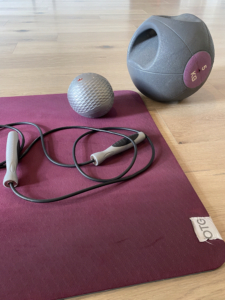
There will be practical advice about the equipment you might want to have to hand, guidance around nutrition and fuelling for your workout, and the importance of adequate recovery in order that you reap the benefits of all that you do.

Leave with: the best feeling

  • energy, a sense of achievement and an eagerness to put all you’ve learnt and experienced into practice
  • the power to support your health, to manage your menopausal symptoms, to remain vital as you age
  • two opportunities to follow-up with us after the workshop, enabling you to progress your training based on how you feel and the positive changes you’ve experienced so far
  • the awareness that while as a woman you are unique in your hormonal journey, you are not alone in making it

The investment: time and energy

  • 3 hours
  • energy, curiosity and drive
  • R950

Come with curiosity, questions and a willingness to try new things in a space that is safe and supportive.

Take your place

Movéo Fitness’s Studio really is small and private, and spaces on the workshop are limited to six. Please contact us to let us know you are interested in attending and to reserve your space on the next workshop.

Terms & Conditions

  1. Payment in full is required to secure your place on The Home Workout Workshop. Payment instructions will be provided at the time of booking.
  2. Once confirmed, we require 48 hours’ notice if you can no longer attend the workshop, at which point you will be fully refunded.
  3. Cancellations less than 48 hours before the start of the workshop will incur a 100% cancellation fee.
  4. The Home Workout Workshop will go ahead with three or more participants booked to attend.
  5. Should Movéo Fitness need to cancel, postpone or reschedule the workshop, for whatever reason, all registered participants will receive a 100% refund and a 25% discount to attend the next or similar event.

Deborah Savin-Curnier: personal trainer

founder of Movéo Fitness

Deborah is an internationally qualified Personal Training with a Masters in Exercise & Nutrition Science and specialist certifications in corrective exercise and women’s fitness. She is passionate about the therapeutic benefits of exercise in the management of menopausal symptoms and the safeguarding of health and wellness in older age.

Deborah has created the Movéo Fitness Studio, a small private space in the Southern Suburbs of Cape Town devoted to the health and wellness of women.

The HIIT Workout Workshop

High Intensity Interval Training (HIIT) can be a valuable part of every woman’s workout week. For peri- and post-menopausal women, it’s close to essential.

But it sounds a little intimidating right?

  • How is a HIIT class structured and what’s involved?
  • Can I modify the workout to match my fitness level?
  • Is HIIT a workout I can do at home?
  • How often should I do HIIT?
  • What benefits will it bring me?

The answers to these questions are best presented in a practical setting, one in which you can try things for yourself.  Read on to find out more about this workout workshop…

Where: Movéo Fitness Studio,

2 Touraine Close, Constantia, Cape Town

In this space dedicated to women’s health, you’ll find energy and motivation to do something amazing for your physical and mental well-being.

The Studio is a private, peaceful sanctuary and the perfect space in which to take time to move; to move in the moment and to move forward with intention.

When: Next date to be confirmed for 2026

Doors will open at 08:30 and we start at 09:00.

For whom: women

Women seeking to optimise their health and well-being as they move towards and transition through their menopause and age with grace. This workshop is intended for those who are curious to know if HIIT is right for them; for those who want to experience it for the first time in a safe and supportive environment.

What you will do: move with purpose
The workout is a form of interval training. The class is structured in a way that meets you where you are today and challenges you by just the right amount. You’ll be able to complete each exercise at an intensity, complexity and duration that works for you, with your instructor, Deborah, on hand to guide you.

There will be a comprehensive warm-up, a gentle and progressive cooldown, and that wonderful moment at the end when you walk off your mat tired but energised.

There’ll be time for healthy refreshments, and to ask questions and learn more about the many benefits this form of training will bring to you.

Leave with: the best feeling

  • energy and a wonderful sense of achievement
  • the power to support your health, to manage your menopausal symptoms, to remain vital as you age
  • the awareness that while as a woman you are unique in your hormonal journey, you are not alone in making it
  • an invitation to join a HIIT class at Movéo Fitness
  • practical advice on how to create your home workout space

The investment: time and energy

  • 2 hours
  • energy and curiosity
  • R650
  • a water bottle, sweat towel and post-workout layer
  • if you own one, please wear your heart rate monitor – if you don’t, just bring your heart

Take your place

Movéo Fitness’s Studio really is small and private, and spaces on the workshop are limited to six. Please contact us to let us know you are interested in attending and to reserve your space on the next workshop.

Terms & Conditions

  1. Payment in full is required to secure your place on The HIIT Workout Workshop. Payment instructions will be provided at the time of booking.
  2. Once confirmed, we require 48 hours’ notice if you can no longer attend the workshop, at which point you will be fully refunded.
  3. Cancellations less than 48 hours before the start of the workshop will incur a 100% cancellation fee.
  4. The HIIT Workout Workshop will go ahead with three or more participants booked to attend.
  5. Should Movéo Fitness need to cancel, postpone or reschedule the workshop, for whatever reason, all registered participants will receive a 100% refund and a 25% discount to attend the next or similar event.

Deborah Savin-Curnier: personal trainer

founder of Movéo Fitness

Deborah is an internationally qualified Personal Training with a Masters in Exercise & Nutrition Science and specialist certifications in corrective exercise and women’s fitness. She is passionate about the therapeutic benefits of exercise in the management of menopausal symptoms and the safeguarding of health and wellness in older age.

Deborah has created the Movéo Fitness Studio, a small private space in the Southern Suburbs of Cape Town devoted to the health and wellness of women.

Step Aerobics 2.0

How it all began

Step aerobics emerged in the late 80s and peaked in popularity in the mid-90s with an estimated 11 million people participating in classes regularly. Gin Miller, an aerobics instructor looking to rehab her knee injury, is credited with its invention. True or not, her partnership with Reebok Step was the platform (pardon the pun) that created the buzz around this cardio craze.

But like all crazes, it had its day and was pushed into the background as the next “big thing” in fitness took centre-stage. After all, why would the fitness industry be different to any other industry in that respect?

Back in the day I was teaching 4 or 5 classes a week and attending more besides – the size of my calves testimony to this! Instructor or participant, I loved the atmosphere, the synchronicity of the group, the smiles on everyone’s faces, and the music with its perfect tempo. But it was the creativity in the movement and the endless possibilities when it came to building a routine that got me hooked.

Back in the limelight

Fast forward to today, and step classes are making a comeback—minus the thong leotards! But my excitement isn’t just about reliving my twenties, it’s what we’ve learnt over the last 30 years that makes Step’s return so welcome.

Step is a cardio-strength workout that can be low or high impact, medium or vigorous intensity. It will move you in all three planes of motion and demand some mental focus too. It’s a “multi-vitamin” when it comes to delivering health benefits.

Heart health at its core

As a cardio workout, Step can be modified to meet you at your current fitness level and challenge you in a way that builds on this. It will improve your heart health and lower your risk of heart disease, especially important during and post menopause when we lose the heart-protective benefits of oestrogen.

Brain boosting

Research suggests a strong connection between leg strength and cognitive health. Well-choreographed step routines will engage every major muscle in the lower body, enhancing both physical and mental health.

Bone protective

In time you can add impact and intensity to your workout, positive stress that will strengthen your bones. You’ll be training you balance and agility too, lowering your risk of a fall.

Muscle, the organ of longevity

When fashions return, they often do so with a twist, and this is certainly true for the Step revival. The twist is that classes are now including strength-specific training to create an even more rounded workout.

Movéo Fitness’s “twist” happens around minute 60 when the pace slows, the Step becomes a workout bench and the focus shifts to muscle strength.

There is strong (oops!) evidence linking muscle mass/strength with longevity. But it’s not just about living longer, it’s about living better for longer. Your muscles support your body in so many ways, helping it to remain in optimal health or get back there as quickly as possible.

The feel-good factor

Step comes with a healthy dose of endorphins, improving your mood and reducing feelings of stress and anxiety. Plus, moving with people you can connect with and feel supported by will enhance your emotional well-being and add to your sense community.

Join us

Movéo Fitness runs a 90-minute Step n Strength class every Saturday at 8.30am. Join this group of wonderful women, move in sync with them and know that you’re doing something truly amazing for your body, your mind and your soul.

What is corrective exercise?

If our bodies performed exactly as they were designed to there would be no need for corrective exercise.  Whether walking down the street, picking up a child, hitting a tennis ball or performing a squat in the gym, our body’s movements should happen because a group of muscles works in harmony, each with their specific role to play.

The muscle teamwork

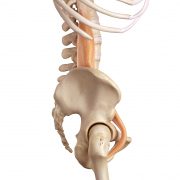
Hip extension, a movement we perform thousands of times a day, happens when we stand up from sitting, when we walk, run or climb up stairs, when we come out of a squat or lunge… and is a great example to work with.Corrective exercise

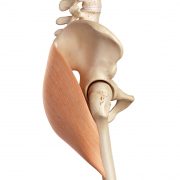
The prime mover or “agonist” muscle takes the lead role in a movement.  In hip extension the agonist is our gluteus maximus – our butt muscles or glute max!  Think rising up out of a squat… as our glute max contracts, the angle of our hip joint opens and our body moves into a standing posture.

Corrective exercise

Gluteus maximus

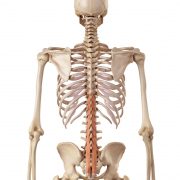
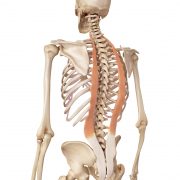
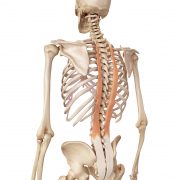
“Synergist” muscles provide assistance to the prime mover. Our erector spinae (group of muscles running the length of the spine) and our hamstring complex (group of muscles at the back of the thighs) are synergists to our glute max in hip extension.

Corrective exercise

Erector spinae – iliocostalis

Corrective exercise

Erector spinae – longissimus

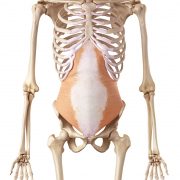
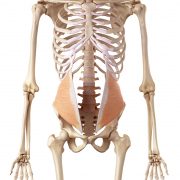
“Stabiliser” muscles support the body while the movement is taking place, maintaining proper joint alignment and minimising the risk of injury.  In hip extension the stabilisers are our core muscles: transversus abdominis, internal obliques, multifidus, and deep erector spinae muscles.

Corrective exercise

Transversus abdominis

Corrective exercise

Internal obliques

Corrective exercise

Multifidus

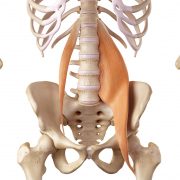
Lastly, the “antagonist” muscle acts in direct opposition to the agonist and should remain relaxed, allowing the movement to happen safely.  Our psoas muscle (hip flexor) is antagonist to our glute max.

Corrective exercise

Psoas minor and major muscles

How might this carefully balanced muscular cooperation break down and what would be the implications?

Movement impairment

Injury (recent or not), repetitive movement or repetitive lack of movement can lead to “faulty” movement patterns.  This means that although movement happens it doesn’t happen optimally with the appropriate muscles taking on the various roles.  These faulty movement patterns are often accompanied by tension and pain.

Consider how much time some people spend in a seated position: at their desk, in front of a computer, behind a counter, in the car, watching TV.  If you’re sitting down as you read this, first sit up straight and then place your hand in the 90° angle between your thigh and your torso.

Corrective exercise

Psoas major

Your hip flexor is running across that angle and as long as you remain seated the muscle is contracting, working to hold your body upright.  In this position it has no opportunity to lengthen and stretch.  While your hip flexors are at work, your glutes are relaxed and stretched across your butt (agonist-antagonist).  With habitual sitting the glutes become over-extended and underactive, rather like an over-stretched elastic band.

Let’s now observe the chain reaction that might unfold over time…

Imagine you’ve been sitting at a desk for an extended period and now you stand up… yes, up you get! Your body suddenly wants that 90° angle to become 180°.  If your hip flexors are tight from overuse that’s not necessarily going to be easy.

Your glutes have been rudely awakened from a pretty relaxing day, while your hip flexors are finding it difficult to switch off.  Your hip joints only extend to say 170°, so your torso is pulled forward into a slight bow.

Without changing the angle at your hip joints – precisely because we’re imagining your hip flexors to be too tight to allow this – try to move your upper body into an upright position, one in which your chest is lifted and your eyes are looking directly ahead.  To do this you’ll need to arch your lower back.

What’s happening here?  Since your glute max are unable to outdo their overactive and shortened antagonist hip flexors, other muscles are taking over.  Your erector spinae, the muscles responsible for extension of the spine, shift from their synergistic role to a more dominant role, creating the arch in your back that brings you to a more upright position.

If over time this pattern of restricted movement at the hip joints persists, some of your core stabilising muscles will become underactive, adding even more workload to the muscles of your back.  A likely outcome of this chain reaction is the all too frequently experienced lower back pain.

The four steps of corrective exercise

A lot of the time it won’t be possible to drastically change the behaviour that is causing the faulty movement pattern.  The good news is corrective exercise can mitigate its impact and return the body to optimal performance and free from pain.

Step 1: Inhibition

The first step is to reverse the condition that started the chain reaction; inhibiting the overactive muscle that brought about the faulty movement pattern.  In our example this is the hip flexor.  In the training environment this is typically achieved using foam rolling, technically referred to as self-myofascial release (SMR).  Other therapeutic input such as physiotherapy or biokinetics may also be beneficial.

Step 2: Lengthening

With tension released and over-activity reduced (inhibition) the same muscle can now be lengthened, creating space for other muscles in the body to perform more effectively.  An increase in extensibility and range of motion in the hip flexor will allow the gluteus maximus to contract more readily and completely.  Static and dynamic stretching of the hip flexor will achieve this.

Step 3: Activation

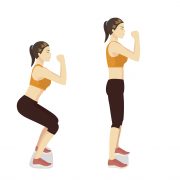
Now that it’s able to move more freely, the currently underactive agonist muscle (in our example the glute max) can be re-educated and strengthened using simple exercises that isolate the muscle as much as possible.  Glute activation can be achieved using simple squat movements such as suspension squats (TRX) and stability-ball wall squats.

Step 4: Integration

The final step is to retrain the muscles as a team using progressively more complex exercises that require each team member to perform their correct role as agonist, synergist, stabiliser or antagonist.  These would be functional exercises that mimic the movement patterns that have until now be compromised.  Think squats and lunges and gradually add the challenge of stability (BOSU), balance (single-leg work), integration (adding upper body movements) and power (performing jumps and turns).Corrective exercise

Identifying a need for corrective exercise

As a personal trainer with a corrective exercise specialisation I use several tools to identify faulty movement patterns in my clients, the simplest one being targeted questioning.  Understanding my client’s job and the physical demands it places on them, knowing the sporting activities he or she takes part in and the hobbies they enjoy, being aware of past injuries or surgeries, piecing together a picture of their life… this information will tell me a lot about how my client moves and where stresses might regularly be placed on their body.  In a training session I’ll call on static postural and dynamic movement assessments to highlight where movement compensations are being made and tension is being placed.

The next step is to design a bespoke corrective exercise programme for my client.  Applying the four steps is a gradual process which, if done properly, will bring their body to a state of balance and optimal performance.

Deborah Savin-Curnier

Finding the motivation to exercise

“I may regret not doing a workout, but I’ll never regret having done it.”

This phrase came to me at the end of a workout that for some reason I’d struggled to get to.  I don’t remember what obstacles had got in my way, or what I might have had to give up to be there, but I do remember feeling really pleased that I’d pushed myself to make it.  The phrase would become a mantra that I’d call on when motivation was lacking.  And it has never been more valuable than one Sunday morning – Cape Town in June.

Several weeks earlier I’d come across the K-Way Table Mountain 16km race (https://kwayvob.co.za/our-races/table-mountain), a stunning run from Constantia Nek up the Jeep Track to the top of the mountain, round Woodhead Reservoir and back.  I’d hiked it several times and was curious to know if I could run it.  There was only one way to find out… my entry form was sent off immediately and I was in!

Constantia Nek Jeep TrailI decided the best approach would be to run the course at least once a week and I stuck to this plan, always managing to pick the perfect weather conditions and calling on my mantra to get me up onto the trail – the stunning views my reward for getting to the top.

Then I woke on the morning of the race to gusty winds, heavy rain and Table Mountain barely visible.  Suddenly it didn’t feel like such a good idea.  Would the race be cancelled?  Would the trail be closed?

Wrapped up warm and waterproof I went to collect my number at 7.15am, still dark, still raining, still very unappealing. “We don’t have you on the list of runners” the marshal declared having checked her list a second and third time.  Here was my way out…  “Never mind, there’s always next year” was ready to come out of my mouth when she passed me a clipboard and suggested I complete another form.

It was in that moment I heard my mantra over and over in my head, pushing me to fill out the form for a second time.  I knew I’d be disappointed in myself if I didn’t run.   But then no matter how challenging and uncomfortable the race was going to be, I wouldn’t regret taking part.  Thirty minutes later I was standing at the start line really not knowing what to expect as announcements were made about how to reduce the risk of hypothermia!

It was a tough ascent.  The wind at times so strong I was running to stay still, the rain turning to sleet at the top.  To my surprise I wasn’t cold and as the sleet prickled my face I found myself enjoying the sensation, smiling at the complete contrast this was to all my training runs.

With layers on my watch was buried, and in any case I’d decided early on in the race to ignore it.  This wasn’t going to be a performance run.  It was going to be the sort of run you survive, a run that proves you’re tough and ever so slightly crazy!

Gradually I passed all my personal landmarks and suddenly I was on my way down, the wind behind me making it wonderfully easy.  The end was in sight – metaphorically speaking!

As the trail flattened out towards the bottom I pushed hard for the last kilometre.  Imagine my surprise when I crossed the line three seconds inside my personal best, incredibly happy to have run it and totally oblivious to how wet I actually was.

As well as giving me a real sense of achievement, this experience served as a powerful reminder of how effective my mantra is – to me at least.  It has taught me something about myself I can use to find motivation; motivation to exercise, to get out there and make the transition from doubting I can do it to knowing I have it in me.  Once that first step has been made, I can look forward to the wonderful feeling exercising brings me, a feeling that stays with me for the rest of the day.

Deborah Savin-Curnier